
March 11, 2026
After a hiatus from the busyness of life and career, I’ve finally decided to squeeze some time to get back to my blogging. Perfect timing because at this time it is Lent and the family home is all but quiet and peaceful right after work. If you think a certain thing is important to you-you, first of all, must give it “time”, well, that’s my personal motto. Last year, I’ve been bitten by the gardening bug, so, I would probably share a thing or two about what I’ve been doing during my weekends aside from writing about my passion for living a healthy and a happy long life.
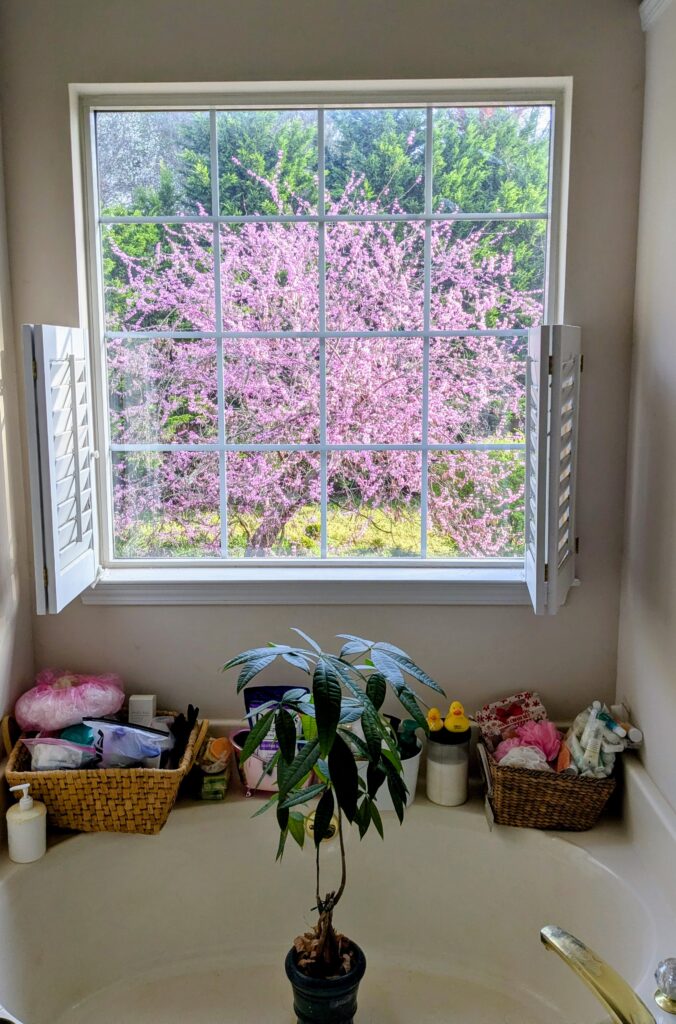
This morning, I’ve woken up to the bright and beautiful sight of our Eastern Redbud (Cercis canadensis) in full bloom and clearly “a-buzzing” with bees. Wish I can jump right out there in my PJs. This is the best time in Spring when everything is waking up… spring bulbs, grasses, frogs (now visiting our patio glass doors) and of course, bugs galore.
Have come up with daily themes for my blogging.
Today is “Learn-from-History Wednesday”. Today is the 12th day of the Israel-US and Iran conflict coinciding with the same day on the 11th of March 2011 — the world watched another crisis unfold that still teaches us about risk, resilience, and the importance of strong foundations.
On March 11, 2011, a massive earthquake and tsunami struck Japan, triggering the Fukushima nuclear disaster …1 died of radiation and 2,000 deaths due to the catastrophe that came after— a moment when everything that seemed stable was suddenly exposed as fragile. It was a global reminder that low‑probability, high‑impact events don’t ask permission before they arrive.
And that lesson echoes loudly today.
Fukushima & Retirement: The Danger of “I’m Fine, I’ve Got Enough” Thinking
Many retirees feel secure because they have:
• a pension
• Social Security
• a 401(k)
• maybe even a paid‑off home
And that’s wonderful — but Fukushima teaches us something uncomfortable:
A system can look strong right up until the moment it’s tested.
The Japanese power grid looked stable.
The reactors looked stable.
The seawalls looked stable.
Until they weren’t.
In retirement, the “tsunami” that cracks even the strongest‑looking plan is often long‑term care.
Not market volatility.
Not inflation.
Not taxes.
It’s the slow, grinding financial earthquake of needing help with daily living — bathing, dressing, mobility, memory, safety.
That’s the event most retirees underestimate.
Why Long‑Term Care Is the Real Stress Test
Here’s the truth most people don’t want to hear:
Your pension doesn’t pay for long‑term care.
Social Security doesn’t pay for long‑term care.
Your 401(k) wasn’t designed for long‑term care.
Actually, to be completely honest, you can pay for long‑term care using those 3 sources I’ve mentioned above— BUT doing so is like digging into the money you rely on for daily living. It doesn’t just strain your budget; it can catapult your entire retirement plan off course. The dream of traveling the world, blessing your family, serving in your church, or simply enjoying a peaceful, dignified retirement can fly out the window. And worse, spending down assets to cover care can push you or your spouse toward Medicaid’s nursing‑home path, which was never designed to be a lifestyle choice — it’s a last‑resort safety net. Planning ahead is what keeps you from trading your freedom for a facility.
And long‑term care isn’t a “maybe.”
It’s a probability event, not a possibility event.
It’s the financial equivalent of a tsunami warning siren — ignored by many because the sky looks clear today.
Fukushima reminds us that the absence of crisis is not the same as the absence of risk.
Just like in Gardening: A Strong Garden Still Needs a Fence
Even the healthiest garden — rich soil, thriving plants, perfect sunlight — still needs:
• a fence
• a windbreak
• protection from pests
• a plan for drought
Not because the gardener is fearful, but because the gardener is wise.
Long‑term care is the fence around your retirement garden.
It doesn’t grow anything.
It doesn’t produce fruit.
But it protects everything you’ve planted.
A garden without protection is one storm away from ruin.
A retirement without LTC planning is one diagnosis away from depletion.
A Quiet Faith Insight: Stewardship Includes Preparing for the Seasons We Don’t See
Scripture often reminds us to be watchful, to prepare, to build on rock, not sand.
Not because storms won’t come — but because they will.
Long‑term care is one of those storms.
And planning for it is not fear‑based.
It is stewardship‑based.
It is acknowledging that:
• bodies age
• seasons change
• care may be needed
• and love sometimes looks like preparation
Fukushima is a modern parable of what happens when we assume tomorrow will look like today.
History Doesn’t Repeat, But It Rhymes
As global tensions rise and markets wobble, Fukushima whispers a reminder across time:
“Strength isn’t built in the storm. It’s built before the storm.”
And long‑term care planning is one of the strongest, most overlooked forms of strength a retiree can build.