
05/15/2026
Did you think retirement was created in the Middle Ages?
Well, I thought so too — until I discovered that the idea of stopping work simply because of age is barely a century old.
For most of history, people worked as long as they could contribute. In the 1880s, “retirement” lasted only about two years and was often marked by declining health. The shift came when society grew wealthier, industrialized, and began to formalize employment.
A Historical Perspective
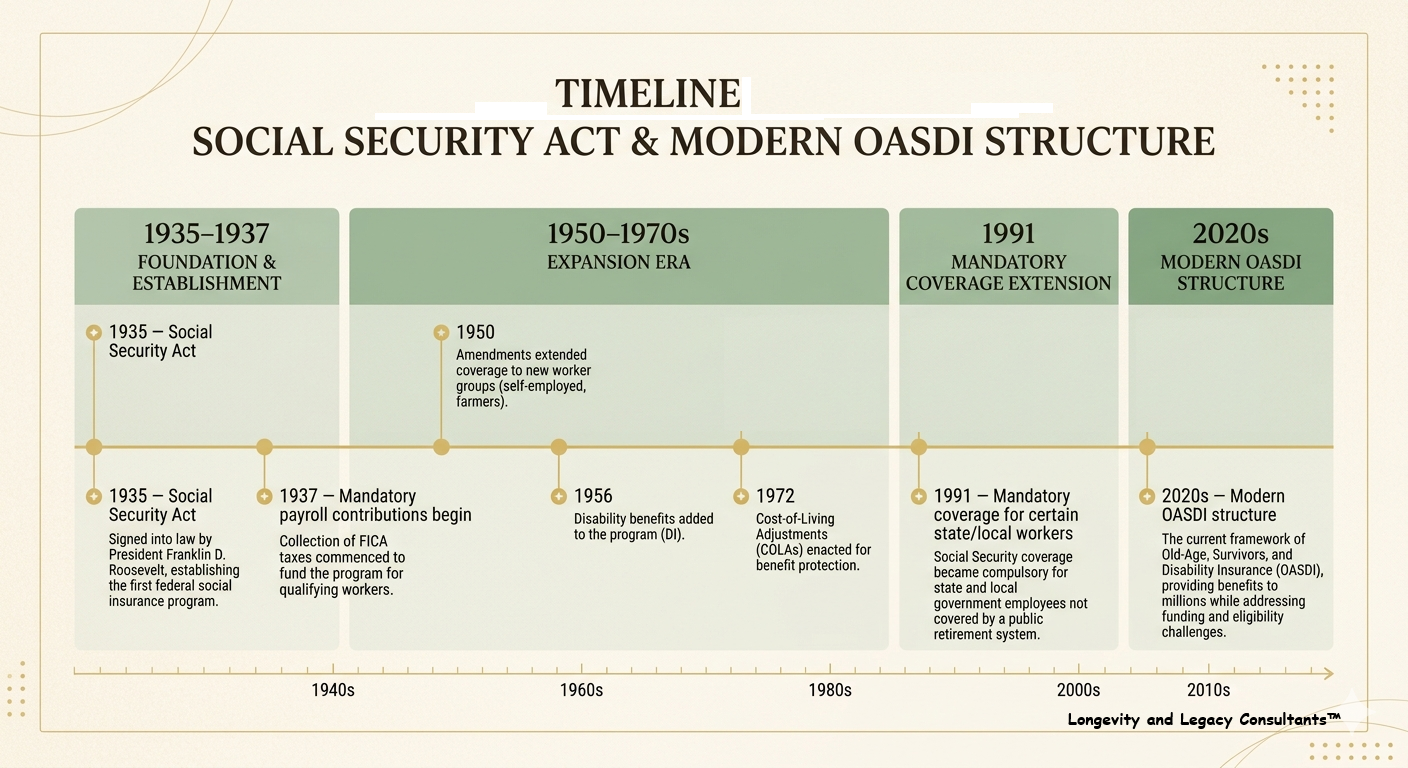
Pre‑1880s: Work continued until physical decline.
1935–1937: The Social Security Act and mandatory payroll contributions established a national retirement framework.
1950s–1970s: Expansion era — disability benefits, cost‑of‑living adjustments, and employer pensions broadened access.
1991: Mandatory coverage extended to certain state and local workers.
2020s: Modern OASDI (Old‑Age, Survivors, and Disability Insurance) structure — balancing longevity, funding, and eligibility challenges.
Source: Boston College Center for Retirement Research
Cultural Differences
Retirement ages vary widely across the developed world.
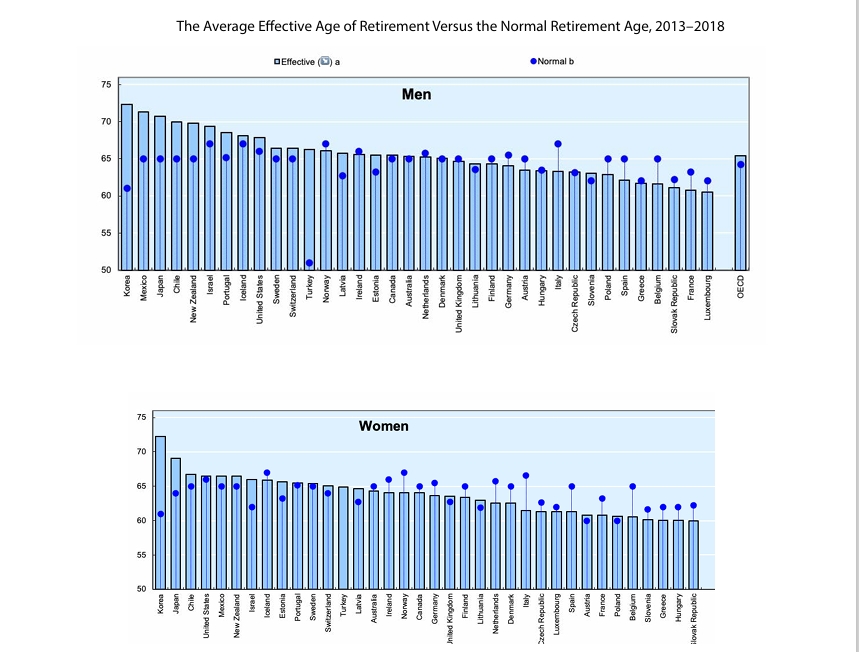
Source: OECD estimates derived from the European and national labour force surveys, OECD Pensions at a Glance (http://oe.cd/pag).
Legend: The blue dot in the OECD graph represents the normal retirement age — when one can retire without reduced benefits.
The gray bar shows the effective retirement age — the average age people actually retire.
Many retire at 62, but some return to work and retire again later, which shifts the effective average upward.
Current Market Snapshot
According to the Boston College Center for Retirement Research, global retirement ages reflect cultural norms and economic realities. As longevity rises, the percentage of people over 60 continues to grow — putting pressure on Social Security and Medicare. In the US alone:
- Most planned to retire at Full Retirement Age (FRA) or later
- But nearly 4 in 10 retire early, often unintentionally
- The top reasons include:
- Health issues
- Job loss or downsizing
- Caregiving responsibilities
- Workplace changes
- Burnout or physical limitations
 Just like in gardening:
Seasons of work and rest are part of growth. The soil of experience enriches the harvest of wisdom — but even the most fruitful garden needs time to regenerate.
 Faith insight:
Rest isn’t retreat; it’s renewal. “Six days you shall labor, but the seventh is holy.” Retirement, too, can be sacred rhythm — a pause that honors purpose.
 Things to ponder:
1.How do we define “enough”?
2.Is retirement for you-an ending or a new beginning of stewardship?
The numbers are changing, the world is changing — but your plan doesn’t have to fall behind. If you want a personalized look at how longevity, Social Security, and modern retirement trends affect your next steps, let’s connect.