
04/27/2026
Hope everybody’s enjoying the sunny spring weather. No sign of rain except for a few drizzles later this week. It’s supposed to be “April showers”, but we barely had any—and now May is right around the corner.
Today’s “new thing” might surprise you.
Most people hear HBO and think of movies, series, and late‑night binge sessions with barrels of popcorn. But the HBO I’m talking about is Hyperbaric Oxygen Therapy (HBOT)—a medical treatment that’s been around for decades and is now being explored for something much bigger: longevity and cellular repair.
Let’s unpack what it is, what it isn’t, and whether it deserves a spot in the longevity conversation.
What Is Hyperbaric Oxygen Therapy?
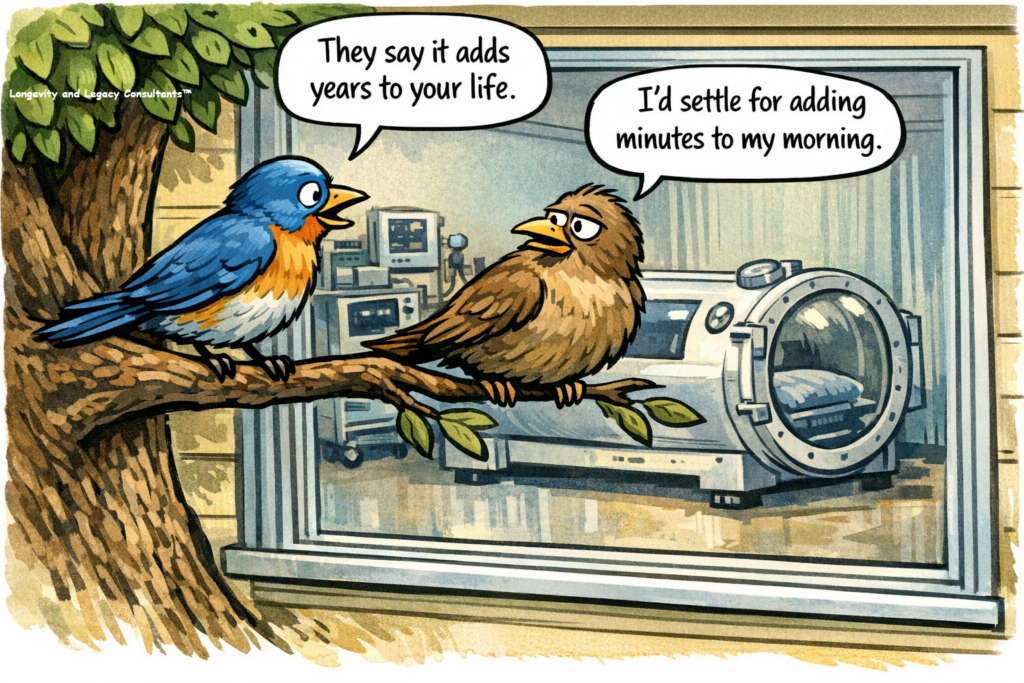
HBOT involves sitting or lying inside a pressurized chamber while breathing 100% oxygen. Under pressure, your lungs absorb more oxygen than they ever could at normal air levels. That extra oxygen dissolves into your bloodstream and floods your tissues, helping them repair, regenerate, and fight inflammation.
Originally, HBO therapy was used for decompression sickness in divers, carbon monoxide poisoning, brain injuries, radiation injuries, diabetic wounds and severe infections.
Now, researchers are studying whether this oxygen‑rich environment may also support brain health, tissue repair, stem cell activity, and healthy aging.
Pros & Cons of HBOT
>Pros
–Enhanced tissue healing — Extra oxygen helps repair damaged tissues and stimulates new blood vessel growth.
–Supports immune function — Oxygen boosts white blood cell activity.
–FDA‑approved for several serious conditions — So the medical foundation is solid.
–Potential longevity benefits — Early research suggests HBO therapy may influence inflammation, cellular repair, and stem cell release.
–Generally safe when done in accredited facilities — Medical‑grade chambers follow strict protocols.
>Cons (of course there will always be side effects)
–Ear and sinus pressure — Similar to airplane takeoff but stronger; can cause discomfort or injury.
–Temporary vision changes — Nearsightedness after repeated sessions is documented.
–Claustrophobia — Especially in single‑person chambers.
–Rare but serious risks — Oxygen toxicity, lung collapse, or seizures (rare but real). Also note that oxygen toxicity might affect those retinas that are not mature yet or are sensitive to oxygen which can lead to retinal detachment, and the end result could be blindness.
–Not FDA‑approved for anti‑aging — Wellness centers may market it that way, but the science is still emerging.
–Cost — Can be expensive and often not covered unless treating an approved condition.
 Just Like Gardening
Think of HBO therapy like giving your garden a sudden burst of perfect conditions—sunlight, water, foliar spray of nutrients—all at once. Plants respond by repairing, growing, and producing new shoots faster.
Your cells behave similarly when they’re flooded with oxygen under pressure.
But just like gardening, more isn’t always better.
Too much water drowns roots.
Too much oxygen can stress cells.
Balance is the real secret.
 Faith Insight
There’s a verse in Job that says, “The breath of the Almighty gives me life.”
Breath has always symbolized renewal, restoration, and divine presence.
HBO therapy doesn’t replace faith, but it reminds us of something profound:
Life is sustained by breath, and healing often begins with what we take in—not just physically, but spiritually.
 Takeaway: The Real Oxygen of Retirement Planning
Hyperbaric chambers may flood your body with oxygen—but clarity and preparation are the oxygen of a lasting retirement.
Without them, even the healthiest plan can suffocate under unexpected pressure: long‑term care costs, tax drag, or a sudden health event.
Longevity isn’t just about living longer—it’s about living prepared and living longer without chronic illness.
The people in retirement who thrive aren’t the ones who chase every new therapy; they’re the ones who build a plan that breathes with them through every season.